
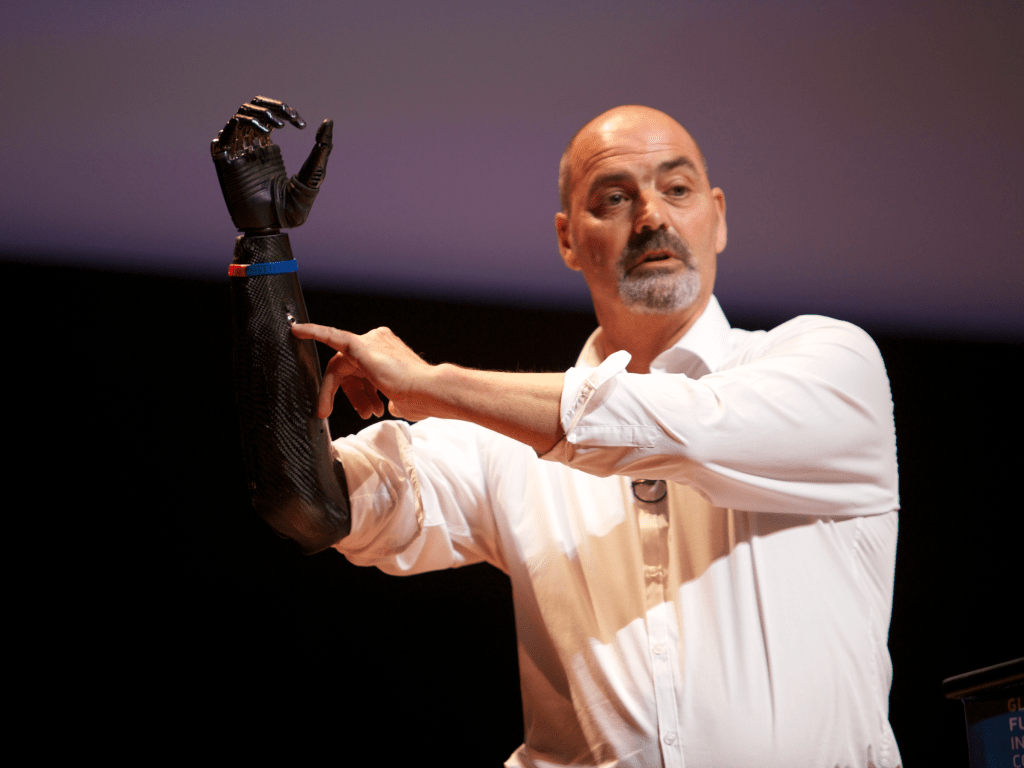
Continuing the inquiry initiated in the last article on the attitude the Stoic ought to have regarding the physical body, let’s consider matters that enable us to move beyond our natural predispositions. Modern marvels of medicine and technology enable us to move our inherent biological boundaries and exceed intrinsic limitations of the potentials1 that belong to us as humans (oikeiosis), as well as enabling us to alter mind and matter in ways which doesn’t naturally belong to us. However, just to clear up a semantic formulation that seemed to cause a bit of confusion in my last article, I used the word “ought” in a softer sense than some seem to have taken it, as if I was prescribing some form of dogma. As always, these things are concerns that the Stoic must reason through for themselves – which I took for granted would’ve been a given seeing how I praised Stoicism for cultivating a great extent of agency within its adherents, in my prior article. Additionally, as always with these articles, they’re essentially my private journaling made public, and hence they’re for me working through subject matters – and therefore starting points for further contemplation and conversation, rather than final truth.
Stimulants
In contrast to what would have been available to the inhabitants of Classical civilization, our contemporary civilization offers several orders of magnitude more ways to stimulate both our body and our mind. My personal intuition towards these possibilities have been with conservative reservation and with very sparing and selective indulgence, as I’ve perceived there to be at least an aesthetic disagreement with Stoic philosophy. However now would be an appropriate time to analyze whether that’s a rational disposition or not.
The founding idiom of Stoicism demands of us that we strive towards achieving 100% consistency in exhibiting virtue, with the Stoic sage being the person who manages to achieve virtue in every action without fail. Within such an imperative, there’s an implicit proposition or recommendation to minimize (and eliminate) whichever external factors one needs in order to be virtuous – because they’re not within one’s control, which means that one puts one faith and ability to be virtuous in the hands of others who, in theory, could cut you off and compromise your consistency (even if they’re higher order factors like wars or supply chain disruptions). Therefore, the ethos leans towards establishing self-sustainability in as many domains as plausible. On the other hand, the Stoic ethos also isn’t an ascetic one like that of Cynicism (though it does lean toward it), and the founding idiom simultaneous calls for practicality in the sense that one’s theoretical imaginations must be practically able to be lived out in real life. Hence there might be an opening to go beyond what the body needs for mere health and sustenance.
Coffee (or caffeine) is without a doubt the most common stimulant, being openly sold and celebrated in every corner of the globe. It’s a stimulant that aids perhaps billions of people every day in their lives, to have more energy and focus available for their professional work, as well as maintaining energy after a long day’s work. What happens physiologically when ingested is that the blood vessels in the brain expands, which allows greater throughput of blood – and that is what causes the invigorating sensation. Furthermore, when brain cells use energy, a molecule known as adenosine naturally accumulates as a waste product; this waste product binds itself to certain receptors in the brain, and as they accumulate and bind, the brain begins feeling tired – and during sleep these molecules are naturally disposed of. Caffeine, as a molecule, is very similar to adenosine, and can thus bind to the aforementioned receptors, blocking the adenosine from binding to the receptors – however, the caffeine molecules don’t activate them, and thus block the brains natural “sleepiness” signal, with the neurons remaining more active to follow. However, over time the brain adapts to both these physiological modulations, naturally narrowing the blood vessels and restricting the flow of blood even with caffeine in the system; simultaneously, it begins building more adenosine receptors, which means that the regular coffee drinker needs to flood their system with even more caffeine to keep the tiredness signal in abeyance.
In matters of virtue, caffeine is a stimulant that ostensibly greatly assists one in moderating the ebbs and flows in one’s energy levels, particularly in raising the lows one sometimes experienced (e.g. if one had a bad night’s sleep). Hence it offers potential for people to attend to the various centers in their life more attentively, energetically, and enthusiastically, and thus by extension serve virtue better – i.e. expanding the scope of virtue, and thus eudaimonia, more expeditiously. However, one drawback it carries in terms of consistency is that once the caffeine in the system dissipates, one tends to “crash”, which typically happens in the afternoon for people who’ve been drinking coffee in the morning at work – which means that one may be more capable of servicing virtue temporarily, but then later one’s less capable of servicing virtue (typically in other domains of life) and thus threatens one’s consistency. Though something caffeine does have going for it is that it’s not an addictive substance (beyond brain’s theoretical capacity to get addicted to anything) and thus there’s no addictive tendencies that may turn into passions if not satiated; by the same token, the compensatory effects that set in when a regular enjoyer of coffee cuts down on their usage does leave them less capable of servicing virtue for a period until their systems adjust back. Thus, for the Stoic, it seems that the most appropriate ingestion of coffee is if it’s an intermittent aid in one’s endeavors, but it oughtn’t become habitual.
On that note, armed with the theories provided by the good Daniel Kahneman, we may also consider the matter even more explicitly in terms of habits. Because during periods of great mental exertion (i.e. utilizing what he categorizes as “system 2”), such as one’s studies or starting a new job or position, one may begin consuming coffee to stave off fatigue and perform for longer (as just detailed). And if this continues for prolonged periods, then the act of acquiring and consuming coffee becomes an ingrained habit that the brain will prefer as a path of least resistance, even beyond necessity – hence it wouldn’t surprise me if a good chunk of habitual coffee drinkers just do so out of habitual obligation, rather than out of necessity. Consequently, the Stoic who just enjoys it out of habit, may be well served by trying to structure their day, work, and routines in such a way that they can be habituated, so that there’s less exertion of their system 2 and thus less of a draw for coffee out of necessity; and when the habituated draw for coffee rears its head, have some alternative ready that you’d prefer to be a habit, and routinely engage in that until the habitual draw to coffee has been overwritten.
Another stimulant that’s quite common, though oft derided in recent years, is that of nicotine. Like caffeine, ingesting nicotine carries with it cognitive enhancements like increased alertness, better selective and sustained attention, improved working memory, and also tends calm its users – with the effects that one tends to work in an increasingly focused manner, and one’s capacity for learning is likewise elevated. The drawbacks are that nicotine reduces the quality of one’s sleep, and, of course, that’s it’s an addiction prone substance. Additionally, the manners of ingestion typically carry adverse long-term health effects; however as for nicotine itself, becoming addicted and losing access to it entails the reverse of its beneficial effects – i.e. poor concentration, greater irritability and mood swings, fatigue, and of course strong cravings. All afflictions that make one less able to serve virtue and may even tempt the afflicted to engage in vicious behavior to procure some nicotine to satiate the addiction. Thus, for the Stoic, this seems like a substance that’s best avoided, or at least only entertained in highly specific and infrequent circumstances.
A common stimulant (or substance, as it doesn’t really stimulate anything) that’s basically a mirror image to caffeine and nicotine is that of alcohol. Upon ingestion, alcohol carries with it a sedative effect upon several regions of the nervous system, acting as a depressant. How it affects one’s various systems is unequal, and the first thing it targets are the systems responsible for “inhibitions” and overall executive functioning – i.e. the prefrontal cortex. This is why when just beginning to drink, one initially feels more sociable, outgoing, and relaxed as these naturally inhibiting systems are sedated, leading to a sensation of being stimulated. However as the alcohol levels in one’s blood increases, other systems also begin to be affected, and overall functioning decreases – and while not as likely to lead to addiction as nicotine, if one does become addicted, the health and social concerns are even more severe.
I think in the Classical articulation of Stoicism, one’d be hard pressed find a place for alcohol, as its drawbacks severely run counter to being consistently virtuous, and its benefits are largely relegated to indifferents. However to me it seems that the Originary articulation of Stoicism I’ve put forward is more capable of situating a space where enjoying alcohol may be appropriate – because of the way that humans mimetically imprint on one another, engaging in alcohol may be a way to bypass some of the socializing layers acting as paramimetic barriers, so that we may more efficiently imprint on one another, model ourselves on each other. And Stoics, as the strivers toward virtue that they are, could more efficiently impress upon others their virtuous ways – both when they and their subjects are intoxicated with alcohol, but also past when the alcohol has worn off. If a lowered guard following intoxication has enabled the Stoic to connect on a deeper level and “closed the distance” with others (them lowering their social guards toward you overall), then the Stoic may much more effectively impress upon them the importance and benefits of virtue – principally by the virtue of the Stoic’s own example, so that they may model themselves upon you.
Lastly, we should consider the case of (elicit) drugs wholesale. I know that’s a very broad category, covering a wide range of risk and benefit profiles2, but covering them individually (or even as categories) is too much for our purposes. We can already apply some rules of thumbs based on what’s already been discussed: 1) the risk of addiction is a serious concern, something the Stoic ought to have a very conservative attitude towards, and must always be able to forego it of their own volition; 2) really be measured in how it’s going to benefit you in the service of virtue – and here I think particularly if the benefits are “social” in nature, like using alcohol to open oneself up, then the Stoic ought to work on themselves and cultivate their psyche so that they’re able to do so out of their own volition at any time, rather than needing stimulants or substances to do so. And obviously the use of stimulants or substances with the intention of creating hormonal or chemical imbalances in the brain which induces certain euphoric experiences for their own sake is strictly frowned upon – their usage must always tie back to virtue somehow. I’ll leave it to the keen reader to reason for themselves how substances such as cannabis, mushrooms, psychedelics, cocaine, heroin, etc. may or may not fit the profile of the Stoic ethos.
Alterations and enhancements
On the topic of the body, let’s consider modifications to our body that aren’t within our nature. Here I have in mind things like tattoos, jewelry, as well as plastic surgery and other cosmetic enhancements (and whatever else might be possible to change in the future). Because e.g. while our skin does provide a modest gradient of pigmentation and natural adaptation, we certainly don’t possess the capacity for change that we in chameleons or certain species of squids and octopodes. Hence modernity offers many possibilities to not merely maintain and restore what belongs to us (oikeiosis), but to go beyond these natural boundaries and potentials.
I think the first thing to consider is whether they’re really not belonging to us. Because on one hand, altering our form and functionality to something that we’ve not naturally “grown into” (here I’m specifically referencing the original Greek work “physis”, which is understood as “the way things grow”) should ostensibly be a clear case. However what complicates this (as its wont to do) is that the Classical Stoics considered “reason” what was uniquely belonging to humans, and where I in my book amend that with Generative Anthropology’s understanding of what specifically belongs uniquely to humans – i.e. 3rd order attentionality – which then allows for language, consciousness, reason, etc. Hence one may be able to argue that because all of these possibilities to exceed our natural boundaries and potentials are a product of our mimesis and reason, that they then do actually belong to us.
To redound such a view, few would argue that Stoics ought not use manmade tools, live in manmade constructions, and wear manmade clothes, like a true Cynic. Yet the hammer and the saw extends or capacities to manipulate the world to our whims; the buildings enable us to extent our living habitat far beyond what we’d survive if we had to live under open skies; and the clothes similarly allows go and remain places that’d be far too inhospitable for us at any time (e.g. a space suit allows us to freely remain alive in, and traverse, the vacuum of space) – and obviously the medicines, surgeries, etc. are enhancements of our capacity to restore ourselves, as detailed in the last article. So why not extend the same courtesy to the domain of the human body itself?
Considering the rationale of tattoos, these are largely acquired out of a desire for “self-expression” in contemporary society, and ostensibly don’t serve a functional purpose, yet are rather permanent once obtained. But then again, one might obtain them for a purpose that one might not be consciously aware of – as Robert Hanson’s and Kevin Simler’s book “The Elephant in the Brain” explores at length – such as social signaling, so that one may ward off people one wishes to avoid contact with, and attract the attention of those one wishes to engage with (i.e. a “sub-culture”). So where does that leave the man of the Stoa? Well, the direct ethical answer that tattoos are seldomly going to be relevant to virtue3, and thus the Stoic would do be to refrain from them. This is further compounded by the fact that should one experience severe burns and be in need of reconstructive surgery that requires a skin transplant, tattoos actively reduce the amount of skin that can be used for such a procedure – and thus a consideration that the Stoic would do well to have in mind, as they pose a potential risk to one’s, what I in my last article called, scope of virtue. Hence unless there’s a deep cultural or ritual role that the tattoos serve, the general rule of thumb seems to me that the Stoic ought to refrain from them4.
Regarding jewelry and piercings, the same considerations apply that they’re largely ornaments of vanity in contemporary society. However, what works for jewelry and piercings, in contrast to tattoos, is that they aren’t permanent fixtures, and may be trivially removed. Consequently, the risks associated with them are rather trivial and mostly limited to the pieces themselves (in the sense of breaking or losing them). While the Stoic probably still ought to lean towards less invasive options and wearing fewer of them (or none at all), jewelry and piercings do carry with them potentials to increase the scope of virtue in social settings that aren’t concerned with Stoic sensibilities. For example, the Stoic may gauge that in some social context, setting, or culture, jewelry and piercings are strong markers of status or belonging, and people aren’t going to take them seriously if not engaged with – hence it may serve virtuous purposes to wear such ornaments on occasion.
When it comes to matters such as plastic surgery, and cosmetic enhancements more broadly, is when we really begin pushing beyond what naturally belongs to us (oikeiosis). However, we might make a distinction between what belongs to us broadly in the category as humans, and what more narrowly belongs to us as individuals. Because one may in theory argue that due to notions like “beauty” and “attractiveness” belonging to the category of humanity, that that means the individual Stoic oughtn’t be proscribed from altering what fate and fortune has had them organically grow into (physis). Rather, we may also consider what belongs (oikeiosis) to the individual: Height? Strength? Appearance? Skin, hair, eye, etc. color? Intelligence5? Personality6?
Hence ought the Stoic just make do with what they’ve been organically gifted with and grow into? As I view it, essentially yes; because while there is a degree of instinct in things like what’s perceived as beautiful and attractive, there’s likewise a great extent of social and cultural conditioning that goes into those perceptions as well (e.g. that tattoos can be considered beautiful, even though their motives and patterns may be a far cry from anything found in the wild) and are hence circumstantial (in the sense that anything captured within mimesis is arbitrary, which doesn’t mean it’s not consequential). Rather, the beauty of virtue is what the Stoic must be principally concerned with; as I write in my book, because virtue is collectively constituted on the human scene by all the actors directing and donating their attention to its center, demonstrating virtue on the human scene will thus be (greatly) appreciated by all the actors on said scene, and it’ll be perceived as attractive and beautiful to them. Thence the Stoic ethos prescribes that one extolls one’s beauty through the excellence of virtue, which in the long run is also bound to yield the most enduring and flourishing results.
Another reason that may be given as to why the Stoic ought to eschew artificial alterations like these is that the human species has naturally evolved different personalities and specializations within its own genus, because we’re a social species and thus function better as a group when there’s a division societal roles and labor. Hence there’s inevitably going to be some specializations that one Stoic is going to be more proficient at to another Stoic, individually influencing what the appropriate thing to do is for each and every Stoic. This means rather than artificially altering oneself into something’s not as innately proficient at (but may seem appealing in the moment in relation to what one’s natural proficiencies are7) the Stoic would likely be best served by acknowledging and accepting what they’ve been dealt, and then let their virtue bridge whatever gaps there may be (and if it can’t, it might just suggest that it wasn’t the path to tread all along).
And, lastly, I was debating within myself for quite an extended period whether I ought to directly address the topic of gender reassignment surgery, as it’s a rather contentious issue these days that seems to be a lightning rod for mimetic maelstroms. In the end, I concluded that if one wants to be a serious philosopher, one must speak the truth as one sees it on any topic – and courage is one of the Classical cardinal virtues of Stoic philosophy, after all. It’s a complex topic to be sure, however I think my reasoning of the last couple of paragraphs hold true here as well. The individual born as a given sex, doesn’t grow into (physis) the unique traits that the opposite sex own (oikeiosis), and thus the Stoic ethos demands that those who feel that way come to terms with what fate and fortune has given them and makes the best of it. As a hypothetical example, someone who’s born a man but feels or perceives themselves as a woman, are likely to going to empathize greatly with the plight of women; and if they’re born into a society that’s male-dominated, they might exploit a unique opportunity to be a voice for women broadly that’s going to be taken seriously by the dominant societal institutions – and thus give their life to improve the lot of women overall. Alternatively, they may sidestep or perhaps broaden the scope of traditional societal roles (in this case, those governing gender) so that one may still virtuously live out one’s life in closer alignment with one’s inclinations – if not fully, at least in part8.
Just to make sure it’s been emphasized sufficiently, like everything else within the article, this is not to pass moral judgement on anyone who engages and take part in these things; these are explicitly considerations and reasonings from the point of view of the Stoic ethos. So, none of this is to say that someone’s who undergone such a procedure can’t “find Stoicism” – just like anyone who might’ve engaged and taken part in, or perhaps suffered because of, all the other matters addressed in this article. I know some very lovely people who’ve undergone such a procedure; yet I must hold to what I perceive to be true, that the appropriate times and places for doing so are vanishingly few, and that the efforts will effectively always be more virtuously put elsewhere – just like there’s vanishingly few appropriate use-cases for e.g. heroin.
Shortcuts
Modern comforts, conveniences, and marvels provide us with new ways to achieve our goals in expedited and painless fashions. New advancements, like drugs that suppress our appetite so that losing weight is experienced as effortless, promises to deliver us to a better world. Ought the Stoic be inclined to take up the offer? Afterall, all they do is promise to correct and counterbalance one’s internal lapses and passions so that one may not only act virtuously, but also more swiftly expand one’s scope of virtue.
Rather than walking through things like weight loss drugs, steroids, growth hormones, etc. individually, I think a common principle may be teased out that should cover them all. In my book I go to great lengths to establish the value that hardships and adversities provide, something Classic Stoic philosophy is also cognizant of. And I think that the succinct lesson of hardships and adversity is “wisdom”, as those are the experiences that truly imparts deeply understood lessons – e.g. one might “know” that it’s an immense struggle to wind down an addiction, but one may first truly “understand” once experienced. Importantly, the notion of “overcoming” something necessarily entails that there’s a sort of internal transcendence and transfiguration within one’s psyche of the imbalance that results in a given passion. For example, one may sate an addiction so that one can continue to act virtuously, something even the novice to Stoic philosophy could tell you is very short sighted and not a solution; in the same vain, if there’s invented a drug that can cure the addiction, it might genuinely help solve the issue, but there’s been little introspection and cultivation of the self realized.
Adversity, and its overcoming, develops one’s psyche and character in both conscious and unconscious ways, which are themselves valuable; even more so is that the character built, the transfigurations one’s undergone may also manifest themselves in other contexts and situations, providing benefit and expanding the scope of virtue in ways that extend beyond the initial circumstance. Hence while medical conveniences may provide immediate results that ostensibly increase one’s scope of virtue, only internal transcendence within psyche and mind may provide reliable benefit in the long run. The wonder weight loss drugs that’s come to market over the last few years make the case very well, as they quench the appetite when taken so that one avoids overeating, but that’s all they do9; the lifestyle changes must be upheld once off the drug, which is inevitably going to be challenging because critical conditioning steps have just been bypassed (and thus is when the real “overcoming” begins). And, needless to say, everything that’s already been espoused regarding being self-sufficient versus relying on externals still holds true obviously.
Consequently, it’s most befitting of the Stoic to take the approach that challenges them the most and offers the greatest (expectation of) transfiguration of their self. However, if I had to find scenarios whence engaging in these things may still be appropriate, I’d probably suggest that once one’s undergone transfiguring undertakings, such as weaning oneself off the addiction completely, it may be appropriate then to take the cure that finally cures it completely to ensure its final erasure10. I.e. conveniences are at their most appropriate when there’s little more to be gained from overcoming, and the fullest extent of conditioning, transfiguration, and thus acquisition of wisdom, has taken place - and thus the greatest appreciation and gratitude of modern inventions may be gained through the perspective that overcoming has granted. I was personally taught this lesson during math classes in my education, as the teachers and professors continuously drilled into us that we were only allowed to use conveniences – i.e. devices or programs that did the calculations for us – when we’d demonstrated that we were able to do it the rudimentary way first, and that we’d understood what it all does and means.
Exceeding limitations
As previously noted, there’s a great extent of these contemplations that hinge on whether something belongs to human nature (oikeiosis) or not11, which is an interesting discussion. Because by nature we physically grow into certain potentials and limitations regarding the human body; however as the ancient Stoics surmised, reason what was uniquely belonged to us as humans – again, Stoics of the Originary variety will know that it’s actually 3rd order attentionality mimesis, but for the purposes of this discussion, it amounts to the same. We humans have a unique capacity to abstractly manipulate our minds such that it may manifest in the physical universe as well, which in theory means that any possibility we can effectuate belongs to us in some sense.
Hence with future possibilities, there’ll probably come a time when Stoics will have to face some really tough choices. I.e. will it ever be appropriate to: Upload or backup your mind to a computer12? Clone yourself? Achieve immortality? How about cybernetic enhancements?
I think what I’m getting at is at what point do we seize being human? This seems to be the threshold that Stoics oughtn’t cross, and that the Stoic ethos demands of us to accept our humanity and retain it. Obviously, these aren’t new considerations to the field of philosophy, however I do think it’s something Stoic philosophy would do well to begin contemplating. For example, if Zeno, Chryssipus, Seneca, or Epictetus had been offered the gift of immortality, would they have taken it? What if their form had been transformed into something vastly different, e.g. as a computer AI? Would we even want them to live that long, or does the finite existence of our being make our life more meaningful and impactful? We know that Marcus Aurelius explicitly didn’t care about being immortalized, so perhaps the only thing we have to go off is example?
Either way, I don’t have any answers just yet, and perhaps these things don’t warrant concern until they’ve become practical realities that we must navigate, like everything else discussed up to this point.
E.g. exhaustion.
And obviously the risk and benefit tables may be different when, say, “microdosing” or some other permutation.
Unless one’s specifically intending to join a sub-culture to pace and eventually lead it.
As always, these things are for the individual Stoic to reason for themselves
In the sense of the physical composition of your brain.
Obviously there’s a question of the degree to which it’s mimetic rather than genetically contingent.
Because of things like status or trends of fashion.
Which then presents further inquiry within the role ethics of Epictetus.
When it comes to the question of weight loss, obviously there’s still other applications.
This is more of a fictive point, as we don’t have any way of finally curing addictions to this day.
One could’ve also gone down the aesthetic route more, as I did a few times.
Or equivalent device.