
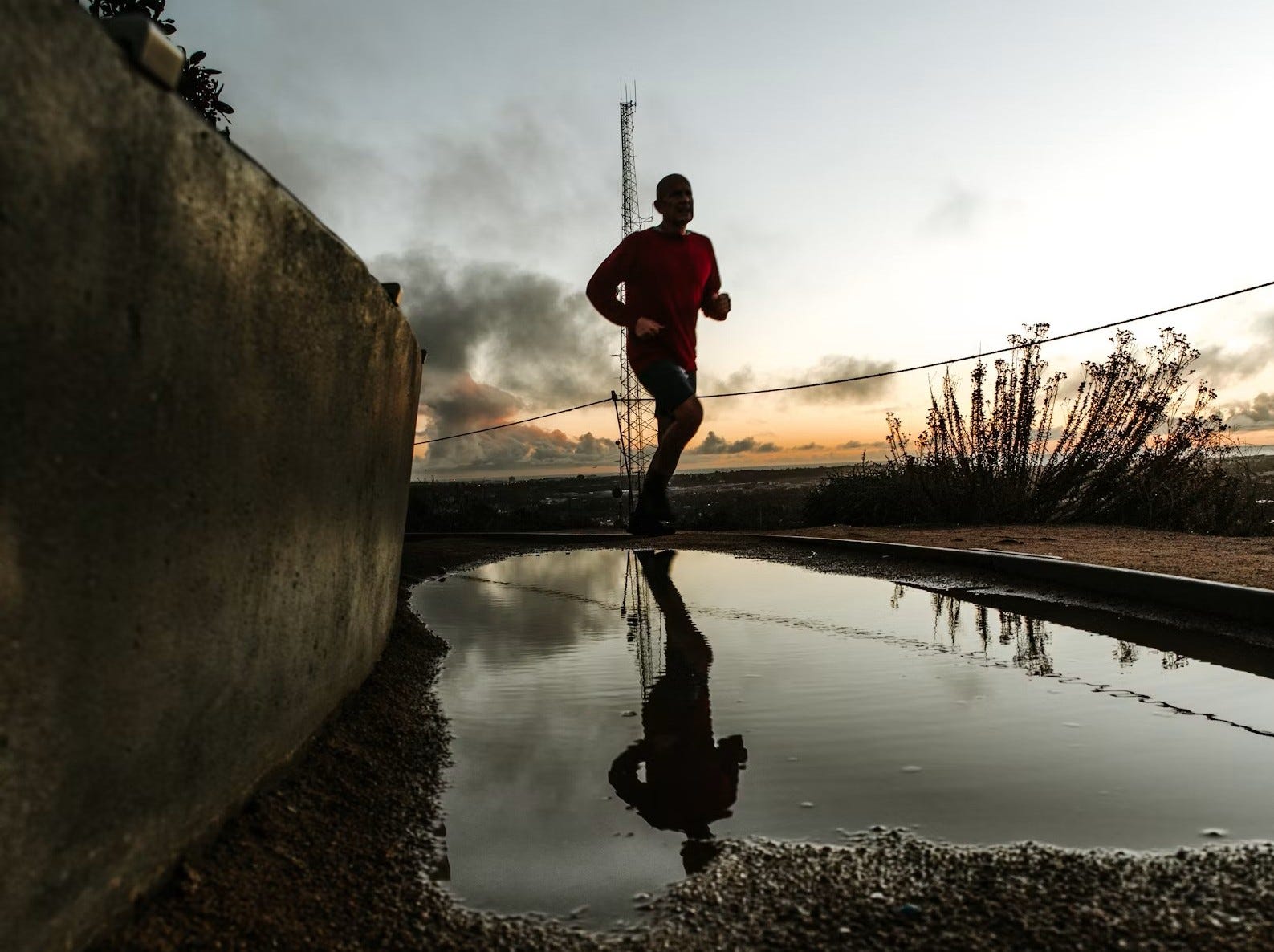
An area of Stoic philosophy that warrants reexamination1 is how the Stoic ought to regard the physical body. Obviously Classical Stoic theory lionizes reason above all else as the way consistency in virtue may be sustainably achieved, thereby prioritizing the mind and brain above other considerations. And while considerations appertaining the physical body will broadly always be further down the line within Stoicism, one of the large advancements or reorientations that’s happened since antiquity is how our physical brain – and thus by extension the mind – is interconnected with the rest of the body. Hence examining the new knowledge and understandings that’s emerged may provide an occasion for reflecting on developments which challenge traditional understandings, and benefits to Classical Stoic theory, techniques, and practices – in the same way Daniel Kahneman’s work on the Dual Theory of Mind challenged Classical Stoic theory by demonstrating the limitations of “reason” as cognitive processes, threatening to completely invalidate Classical Stoicism; and yet simultaneously provides the solution in his work on the cognitive processes related to habits.
As a very mundane example of how the condition of the body impacts the mind, consider the case of illness. Everyone has some familiarity with these ailments that can befall the body – most temporary, though some may gain a degree of permanency. Migraines and headaches make short order of one’s system 2 capacity, in turn greatly limiting how much is available to expend on reason2, relegating one to rely one what’s been embedded in habit – and if severe enough, with complete incapacitation to follow. Likewise, many other ailments in the body may similarly impact either the range of actions one’s able to engage in – e.g. if one’s bedridden with flu, the only virtuous path forward is likely going to be to wait it out – or even things that impact one’s mind and decision-making, something even simple things like dehydration, sleep deprivation, hyperthermia, etc. may affect.
The baseline orientation
In my book I emphasize how one of, if not the, primary advancements in consciousness that can be directly traced back to Zeno, was his realization that virtue was something any human’s capable of, and that it wasn’t limited to certain (groups of) people. This contrasts with prior thinkers like Plato and Aristotle, to whom virtue only belonged to the aristocrats and higher classes, and thus not something that those of lower status (or non-Hellenic origin) were considered capable of engaging in. The revelation Zeno had, that from the most peripheral slave to the most central emperor, virtue was equally available to engage in for all, is what led them to adopt (and adapt) the Cosmopolitanism that the Cynics had inadvertently articulated through negation as they welcomed everyone who’d adopt this ethos of unrelenting virtue.
Why this is salient in the context of the physical body is that virtue is always available regardless of which position and situation one is in – however, the position and situation thus determine what’s appropriate to do, i.e. what the virtuous path forward is. In my last article I detailed that realizing the true potential of Stoicism entails moving beyond the mere therapeutic aspects of the philosophy in order to achieve eudaimonia through practicing virtue – and this is the frame of mind that I think the Stoic ought to adopt. While ostensibly a preferred indifferent, a body that’s in tiptop shape can attend to a wide range of social scenes and imperatives; the worse shape the body is, the narrower the range of things they can engage in on behalf of virtue is. Thus, even though their mind and reason have first priority, a Stoic who ensures that their body remains in relatively healthy and fit state have more avenues to fashion the kind of flourishing that benefit themselves and the social group at large.
Retreading a hypothetical example I’ve brought up in the last two articles, if a physically frail or weak person observes someone drowning in the water, the virtuous path forward as an individual is not likely to be to attempt to rescue the drowning person on their own; rather, it’ll likely entail getting the attention of someone more physically capable, e.g. a lifeguard, for whom the virtuous action in the given situation would be to mount a rescue. Had the frail or weak person been more physically capable, they’d been able to more directly service virtue and thus consummate flourishing – if their body is just sickly or generally incapable of that kind of strength, then it is what it is and they’ll just do what they can to compensate and strive towards excellency in other avenues of life. Should the physical weakness merely be a result of not having spent the effort to gain greater strength, endurance, and overall fitness, however, then the individual is in essence intentionally limiting themselves as to the range of possible avenues they can appropriately serve – and thus virtue.
Consequently, the reasoning for cultivating a fit and healthy body is the same as perfecting one’s reason – it enables greater capacity to serve virtue. And here I’m going to coin a new concept (or idiom): The scope of virtue. As the keen reader may have already teased out, the scope of virtue pertains to the range of undertakings that one’s able to attend to virtuously – including the range of different “manners” or “roles” one’s able to inhabit within the given endeavor or activity3. Perhaps this seems a bit paradoxical, because if anyone’s theoretically capable of being virtuous regardless of (external) circumstance, doesn’t that suffice? Well no, because electing to remain incapable (whether in terms of physical or mental capacity) limits the scope of virtue: For example, if one’s completely inexperienced and unfamiliar with a given social context, the virtuous path forward is likely just going to be to observe and learn from the vantage point of the periphery – however one must also learn then (to be virtuous) otherwise one’s only extracting from the given social scene (however marginally). Similarly, if an actor is suffering from obesity to an extent that they can’t contribute to the vast majority of social scenes, the virtuous path demanded by the social center will likely entail losing weight so that one may contribute more significantly in the future4.
In line with my last article, pursuing virtue is the only way5 to realize eudaimonia, which is this kind of simultaneous privately and publicly realized flourishing – and every little bit counts! But e.g. merely learning a craft, or a field of study, contributes very minimally to public flourishing even if it’s the virtuous endeavor to pursue – rather, it’s when the learning is practically deployed, and through the yielded results, that greater flourishing is practically realized. Hence there can be qualitative (or “quantitative” in a sense that isn’t measurable) differences in outcomes in terms of flourishing that inevitably informs and defines what the virtuous path to take for each individual actor on the social scene is. This may sound coercive or dictatorial, but keep in mind that virtue is the aggregate of the intention of all the individual actors attending to the same social scene, and is thus also a product of oneself – and typically just feels quite seamless and unforced. For example, consider a group task or project at school or work; deliverables are typically delegated to those with the most appropriate skillsets to ensure the best outcomes, in an effortless and expedient manner – which has the greatest chance at delivering the greatest potential for eudaimonia6 (i.e. the best outcome for the task or project).
Obviously, there’s a trade-off between cultivating oneself, whether mind or body, and other responsibilities in life. Hence everything in moderation, it’s up to oneself to ascertain how much time and effort one can dedicate to these self-cultivation activities versus the duties one’s entangled in in life (i.e. to determine what the virtuous partitioning is) – but there’s no doubt that just a little effort is better than none. However, I think this is the overall orientation and attitude that the Stoic ought to have regarding their physical body, which is essentially the same as they have toward their mind, psyche, and reason. Why this might not have been so pronounced in ancient philosophy is likely due to the environment it was created in: Basically, everyone was fit. Physical unfitness was probably in consideration as to being ill or maimed for the most part, and all the variation of unfitness that the comforts and conveniences of today enable was basically inconceivable at the time. E.g. great philosophers, like Socrates, had served in the Athenian navy (with Xenophon) and were thus above the typical fitness, even for their time.
The physiological links between body and mind
In my book I use the example of overeating and compare it to that of having too much spare attention. This specific analogy is orthogonal to the present topic, however the case of overeating is an appropriate place to start. Obviously, the ancient Stoics cautioned against eating as it’s one of those activities that may easily lead to passion, that’s also obligatory for us to engage in just to live. However, what physiologically happens when too many calories are ingested is not only the surplus gets stored in fat cells, but the body actually begins using the excess for “stupid stuff”. For example, it begins using the excess to overreact to injuries and illnesses, which itself may cause more harm than good (e.g. excess or even chronic inflammation) – however one of the primary excesses, salient to Stoicism, is that the body begins producing increased levels of cortisol, i.e. the stress hormone. Needless to say, this is highly connected to the brain, mind, and mental state, and the Stoic who suffers from excessive cortisol levels will be at greater risk to drift into passion.
But that’s not the kicker – it’s that this may also apply when only ingesting the sufficient number of calories. Because a common myth about fitness is that increased activity equals increased caloric burn; so to offset what one’s ingested one must simply engage in more physical activity. Alas, it’s not quite that simple: Because the body prefers7 to sustain the same baseline caloric burn rate per day8, so depending on one’s habitual physical activity, the body will actually readjust toward that baseline. Research shows that a man who engages in a lot of physical activity, and another man who’s basically a couch potato, will actually have nearly the same caloric burn rate per day (rarely exceeding 100 calories in difference). When one switches up physical habits, the caloric burn rate goes up temporarily; but as it becomes habituated it gradually trends down to the baseline (and obviously the reverse is true, if one suddenly stops engaging in as much physical activity, the burn rate will be lower temporarily and then gradually trend upwards). To the Stoic however, the salience is that the person who lives a too sedentary lifestyle, burning too few calories through physical activity, will suffer the same consequences as if they were overeating, because the body attempts to burn enough calories to reach its natural baseline – further redounding previous implications that the Stoic ought to adopt an active lifestyle, even if their body isn’t technically “unfit” and merely “weak”.
Hence when it comes to things like losing weight, what matters most is actually the amount of calories one ingests, which entails insuring consuming less than one’s baseline burn rate. Staying on the topic of eating, there’s a common idiom that goes “you are what you eat” – and other than caloric intake, research suggests there’s a connection between the nutritiousness of the food and the brain. Known as the gut-brain axis, the gut sends signals to the brain, and depending on the signal, the brain will react in different ways. If one eats a lot of overprocessed and nutrient-poor foods, the gut will actually send distress signals to the brain, which releases stress hormones and increases the likelihood of e.g. inflammation in the brain and greater mood swings. Conversely, if one eats food rich in nutrients, the signals sent to the brain will encourage the production of new neurons and better connections, which helps one remember, learn, and overall think better (among other benefits). And beyond that there’s obviously innumerable benefits to the rest of the corpus.
And just like the gut can actively contribute to one’s feelings, there’s evidence that the other organs also play an active role. For example, a diseased liver can instigate confusion and even depression – and the liver generally contributes a great deal to the chemistry of the brain. Another example is something those who’ve engaged in meditational practices will be highly familiar with: The lungs. Because just the act of breathing impacts the nervous system, and the lungs are unique in that one’s consciousness can take actively control over it. One’s feelings and emotions changes how one breathes unconsciously: but breathing may likewise be used by consciousness to change one’s feelings, emotions, and mental state – something this author made liberal use of during exam periods. The interested reader may continue the search on their own, if interested, in how the health of the organs affects one’s brain, as well as the various breathing techniques which can be used to impact the autonomic nervous system, attention and brain rhythm, and even blood chemistry.
Another striking link between body and mind is that physical movement of the body stimulates the movement of fluids within the brain which remove waste products. These waste products build up at all hours of the day, and physical activity helps get rid of them – however if one sits very still for perhaps hours at a time, these waste products accumulate and begins impacting one’s cognitive processes. Therefore, if one sits and really needs to use one’s brain for extended periods of time, one’s cognitive capacity actively declines by doing so9; whence one ought to ensure intermittent movement for better overall results. And this is just one specific link, but there’s a great deal of research that demonstrates that physical activity is associated with improved mood (both making one less reactive to the adversities of life, and more receptive to the joyful aspects of life), memory, and overall executive functioning.
There’s a multitude of other ways mind and body are interlinked, however I think I’ve made the case enough why being concerned about the health and fitness of one’s body matters, even for matters which are ostensibly exclusively cerebral. Hence the Stoic would do well to have a similar attitude orientation toward their body, as they have toward their mind and reason. However, just to pull a little in the other direction, one’s psyche, habits and reason are ultimately what decides how to act – the body is “just” a tool through which we act (even if there’s feedback-loops that have an impact on the former). Hence the practical attitude that’ll probably serve Stoics best is to regard is as a tool – we keep our body in good condition for the best results, so that we may attend to virtue with the highest degree of felicity plausible, and thus realize the greatest extent of eudaimonia. Just like we keep any other tool in good condition so that it serves us best; needless to say, the body is the primary tool among tools, as it’s the principal tool that allows us to act in the world and even use other tools – hence it’s the one that deserves our greatest care.
Restoring functionality
As already noted, Stoic philosophy prescribes that any human has the capacity for virtue regardless of position and circumstance, and hence those who experience a loss of functionality – whether temporary or permanent – can still contribute to the common good in some ways. When one’s afflicted by illness, that’d commonly look like resting and waiting for it to pass. However, what happens when the afflictions are more serious, and necessitate intervention? How do the Stoic regard the modern-day wonders that can help restore functionality?
When suffering from diseases and afflictions of minor importance, like a cold, flu, stomachache, scrape, etc., I’d say the Stoic ought to forego alleviating interventions like antibiotics or even just things like painkillers. Because there’s the physiological factor of e.g. the natural training of the immune system that’s needed to fight the microbial life one’s exposed to every day, and gain natural immunity – as well as preventing interventions that might even make everything worse. Then there’s the psychological factor in feeling the pains, and dealing with it, that builds mental fortitude and endurance towards pains and discomforts more broadly. And most importantly, there’s the factor that the medicines might not always be available, and one can never know oneself completely sure that they’ll be when one needs them – where having built a physiological and psychological tolerance to the pains and discomfort comes particularly handy.
They especially come in handy when one does experience more severe afflictions that require intervention at some point in life. And the requirement for when the Stoic ought to pursue intervention, instead of letting nature run its course, is when there’s genuine risk to one’s functioning (including death). Even though good health is a preferred indifferent, it can have a significant impact on how one’s able to attend to the centers in one’s life (and even which one), affecting the effort one can put into servicing virtue, and thus the extent of flourishing that’s able to be achieved. For example, if one becomes afflicted by a lung disease that leaves permanent scar tissue behind, it’ll likely impact one’s capacity for physical exertion, and thus limit one’s efforts in some domains of life (some social scenes). Of course, Epictetus himself was famously disabled in one of his legs10 - while this circumstance didn’t prevent him from practicing virtue, it inevitably would’ve closed the door for some undertakings he could’ve pursued in the name of virtue (say, be a soldier, construction worker, etc.) and guardrailed him towards a narrower range of preoccupations he could virtuously attend to, i.e. limited his scope of virtue. Consequently, I’d say the operating principle regarding medical intervention ought to overall be an assessment of whether long-term functionality is impacted or not: If not, let nature run its course; if likely, do intervene.
Occasionally one may not be able to save or restore whatever’s been suffered, even with intervention. Ought the Stoic accept artificial replicas such as crutches or canes, prosthetics, pacemakers, or other medical aids (and whatever else artificial replications the future holds)? Well, on one hand they’re not in “our nature”, i.e. they don’t belong to us (oikeiosis); on the other hand, they intend to replicate our nature so that we may unfold whatever else belongs to us as well as possible. For example, if Epictetus had entirely missed one of his legs, he’d likely have had crutches (or perhaps even a leg prosthetic) to regain some sense of the natural movement that belongs to him (and not being able to move at all would’ve obviously seriously limited his scope of virtue). Obviously, the ancient Stoics considered the nature of something as its highest ideals: I.e. it’s in a bird’s nature to fly in the air, while it’s not in a bird’s nature to suffer a broken wing. This line of reasoning, as well as sheer practicality, suggests to me that the Stoic ought to accept artificial replicas that imitate their nature, so that their nature may be expressed to the fullest. With the asterisk that they ought to practice in their mind how they’re going to deal with it if lost (as ought any Stoic do, really).
However, are there any forms of intervention that the Stoic ought to proscribe completely? The most pertinent issue that springs to mind is when the intervention itself bears considerable risk, exhibiting a chance to make things worse. This obviously includes death, but could also just be one that leads to further reduced functionality – and here I have in mind the infamous example of William B. Irvine who in his book “A Guide to the Good Life: The Ancient Art of Stoic Joy” tells of an eye surgery he had to improve his vision, where they’d forgot to tell him that he’d be blind immediately after the surgery, and his vision would return over an hour. Fortunately for him, the eye surgery went well; however, it’s not an intervention without its risks, and it does involve a chance of being blinded instead. Therefore, the Stoic really ought to weigh the risk to benefit ratio when considering interventions that may restore or improve functionality. However, they also ought to evaluate them on whether the functionality is really relevant for their pursuits; e.g. had Epictetus had both legs functional, he likely wouldn’t have done things that much differently either way – hence, for his commitments, restoring its functionality would’ve been irrelevant for virtue (and thus truly just an “indifferent”). If assessed as not that relevant (or an insignificant chance of it becoming relevant), then the Stoic probably ought to omit doing so11.
These were the baseline cases to consider, forming a solid foundation that’ll serve the avowed Stoic well. However, there’s other considerations regarding the human body and the mind which are a great deal more complicated, which also warrants treatment. However, this article has already reached a healthy length, and I will thus defer the more complex considerations for the next article.
As in, to be looked at again, not that it must necessarily be torn up.
With reason and system 2 not being synonymous, but rather reason being a learnt skill which utilizes system 2 in specific ways.
And while I have to consider it some more, tentatively it could be suggested that preferred indifferents are broadly those things that broaden the scope of virtue, while dispreferred indifferents are those things that narrow the scope of virtue.
In my book I used the theory from Generative Anthropology surrounding one’s “debt” to the center regarding this line of thinking.
Per Zeno.
The Stoic logic for the division of labor.
Obviously such a phrasing connotates intention, which the body doesn’t have, so it’s just a functioning of automatic systems and processes.
Around 2600 calories for men, 1900 calories for women.
Either from childhood, or because of his master, depending on the source.
Needless to say, this is all up to the individual Stoic to reason for themselves.