On Fun
Situating fun within Stoicism

In my prior article “Fun & Games” I contemplated how the Stoic should orient themselves toward play, games, and hobbies, exploring how engaging in those activities may be understood and validated by the Stoic founding idiom, and thus situated within Stoic theory. However, the article did not directly inquire into the notion of “fun” itself, and I was left subtly perplexed by it after I’d written the article, not being able to properly situate it within neither Classical nor Originary Stoic theory, nor Generative Anthropology. After doing some digging, it turns out I’m not alone. Whereas inquiries into notions like “happiness” are practically endless (including within Stoicism), fun seems to be one of those feelings or emotions that’s taken for granted and overlooked within virtually all domains – intellectually, academically, and publicly, and even privately. Hence works that directly inquire into fun are relatively few in number.
In her book “The Power of Fun” author Catherine Price explores just exactly what fun is, why people should pursue having fun, how to (learn to) have fun, as well as the things kills our fun (including that which masks as fun, but really isn’t). Other than the topic and inquiry itself, one thing I genuinely appreciate about the book is that it not only draws from her own anecdotes, nor only various academic research, but in writing the book she actually engaged the following she’s accumulated over the years as an author, having them send in their own anecdotes, stories, experiences, as well as having them test some of the theories and techniques she was working on, to get real feedback in pursuit of her inquiry.
In her book she lays out how the word “fun” is used for innumerable contexts to mean a multitude of things, and thus eventually targets what she labels “true fun” – and to make people understand what she’s getting, tells that one should think of something (a memory, or something they like doing) that’s just so fun. She describes true fun to be an experience that ebbs and flows, contrasting it to things like happiness which is more of a “state”. It’s an experience that doesn’t as such rely on anything specific, and can spontaneously appear or be deliberately conjured in almost any situation and context – hence wealth or material possessions doesn’t automatically instantiate fun, though they can facilitate it (as virtually anything can). Though she emphasizes that it’s not possible to continuously experience true fun; there’s always a beginning and an ending.
Through analyzing all the testimonies from her followers, her own experiences, as well as whatever academic literature does exist on the subject, she asserts that there’s 3 unifying preconditions that must be fulfilled to experience true fun. We must simultaneously be experiencing: 1) Playfulness; 2) connection; 3) flow.

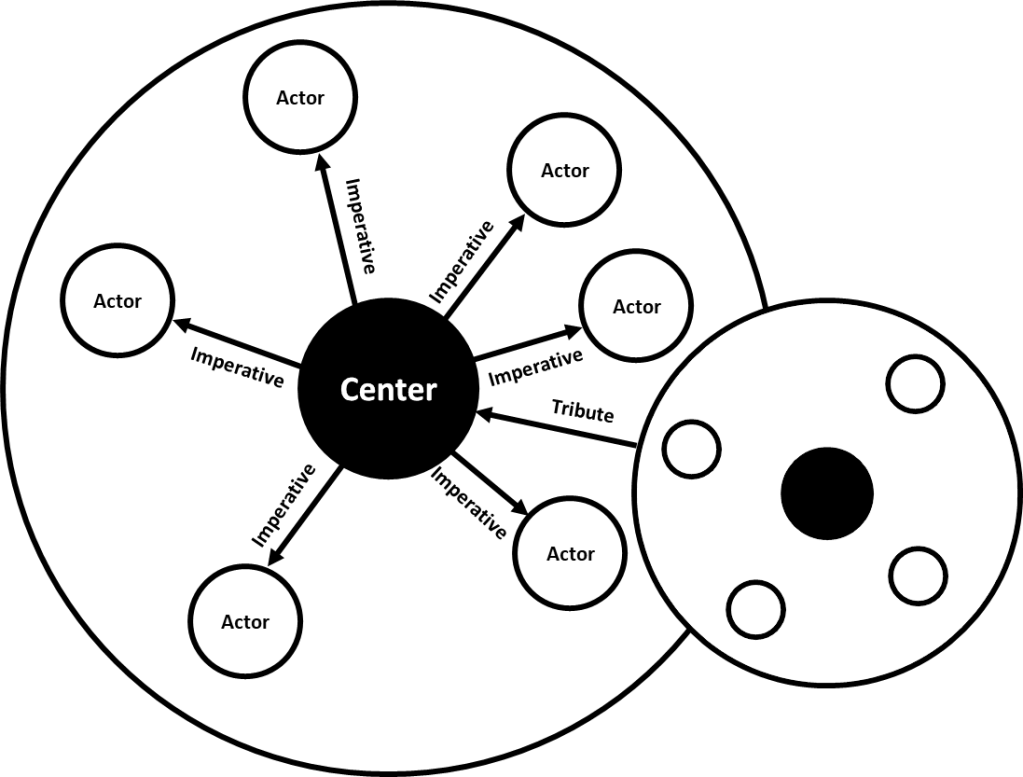
Playfulness is possessing a spirit of lightheartedness and freedom, where one is just focused on an activity without anything particular in mind (with regards to outcome, obligation, reward, etc.). She asserts that playfulness creates a sense of being “outside” one’s normal reality, being carefree with neither responsibility nor concern. There’s no doubt that the impulse for play resides within the animal instinctual side of the human, as previously explored, and must necessarily become elongated by mimesis. My immediate thoughts is that playfulness mimetically opens up a space where the center that forms around the object of attention isn’t as such issuing any imperatives or obligations, and thus the actors on the scene can sort of donate whatever they want, liberally rearrange the scene as they see fit, and can freely imitate one another or bring prior mimesis (stored within the mimetic model of their psyche) onto the scene as they see fit.
Consequently, playfulness can’t really emerge around a center that’s issuing a lot of imperatives or obligations (or emotions), like in a crisis situation – for example, take two companies, one is in serious financial difficulties, the other is doing quite well; in the former there’d likely be little room where it’d be appropriate to enter a playful mode as it’s all hands on deck, whereas the latter would offer plenty of appropriate opportunities due to relative abundance. Hence the less dire the situation is, the more space the center can allow for playfulness. This line of thinking is even echoed by Catherine when she brings up Abraham Maslow’s hierarchy of needs, concluding that one’s basic needs must be covered before it’s really possible to engage in true fun – and recall how the center is constituted by the attention of the actors attending to it, hence the more stressed they are, the less likely their own individual contribution to the center is likely to condone of “taking a break” from carrying out the issued imperatives.
Connection is about having a special, shared experience with someone (or something). She explains that a common throughline in the experiences shared, is a sense of being unusually connected to the surroundings – particularly other people, experiencing joining together with them while simultaneously being totally themselves. Obviously, humans as scenic beings are inherently connecting with one another on a level that animals cannot, when we merge our attention together, imitating and impressing on one another. Hence, I wonder if the sort of connection gestured at involves a sort of mutual modeling on one another, (perfectly) mirroring a part of each one’s mimetic model while simultaneously constructing them together – a special shared experienced that the actors sharing the experience all took part in and thus began modeling on each other, fully in sync.
This facet of true fun presents an interesting dilemma, because – from the point of view of Generative Anthropology – Stoicism in large parts aims at constructing the sort of internal mimetic model in one’s psyche that’s paramimetically ready and able to counteract any received mimetic stimuli, so that one’s always able to engage in the (post)ritual of reason. Thus, the question becomes, could there within the Stoic ethos be a valid reason to allow others with essentially unobstructed access to imprint on your psyche, modeling your internal mimetic model? Well, we must remember that to build out one’s mimetic model, forming the sort of paramimetic ballast needed, one must first receive mimesis to begin with, before one’s mimetic model is able to be molded. Hence connection (and fun) may actually be a way of receiving mimesis in an expedited fashion, which is beneficial when it’s the right mimesis one’s looking to absorb. For example, if one’s bad at doing some task or action (or prevent oneself from doing so), connecting and playing with someone who’s good at it may be able to make one absorb the mimesis (and perhaps other things outside of mimesis) much more efficiently, than if it must go through system 2 and the ritual of reason first.
Flow involves being fully engrossed and engaged in the present experience, grounding one in the moment. She explains that distractions are anathema to flow – and thus true fun – but so are things like self-consciousness and judgment; i.e. anything that’d draw attention away from the ostensible experience, whether that’s simply drawing attention to something completely different, or pull out from the experience to evaluate it on a meta-level. This one also poses an interesting conundrum, as this would appear to go against Classical Stoic teachings where one ought to be observing, analyzing, and evaluating, before assenting – hence this notion is ostensibly incompatible with Stoic teachings.
Momentarily taking a step back from the inquiry on fun, it’s interesting that the term “flow” is deployed. In Daniel Kahneman’s popular book “Thinking, Fast and Slow” also uses the concept of “flow” where he depicts a specific state that one can enter to push one’s system 2 far beyond ordinary operating parameters – i.e. far past typical depletion. And not just by a little, but where one’s able to just go (mental) distances that’s several times longer than what one’s normally capable of.
Whether or not Kahneman’s flow state also requires not being distracted isn’t clear from his work, however given how our attention span physiologically works as several “planes” or “belts” that have varied adjustment periods, I’d imagine so. Hence to service virtue better, Stoicism must allow for a (mental) space where one can enter and perform without obstructing oneself, suspending one’s mental apparatuses to allow one’s thought stream to flow unopposed. As I see it, doing so isn’t really that complicated, as one just needs to engage these faculties beforehand, insuring that undertaking this endeavor is actually the right and virtuous thing one should spend their time on (as best as one can within reason, there’ll obviously always be uncertainty and unknowns). Stepping back into the inquiry, we’ve now been able to situate where the Stoic ethos sanctions entering a flow state on a general level, hence there’s also a narrow passageway for it in the context of fun. Seemingly one ought just do the same due diligence as with prior to entering the flow state in a more serious context.
She also lays out some additional guidelines for true fun.
1. One must allow oneself to pursue and engage in fun, as she remarks how we’ve broadly become conditioned to consider it frivolous, selfish, even immature and childish; that we ought to focus on loftier goals and direct our efforts to more “serious” things, and that fun is purposeless – hence one must remove all the conditions within oneself that prevents oneself from partaking in fun.
2. One must make space for it; filling up one’s time with is not conducive to true fun (e.g. going on a vacation and filling out the itinerary for all hours of the day), and one should rather be doing fewer things to allow more opportunities for fun to present or “unfurl” themselves.
3. Our attention must be in the moment and not elsewhere, meaning one should remove distractions like one’s phone, as well as not being mentally somewhere else.
4. As already brought up, our basic needs must be met, including trusting and feeling safe with the other actors one’s having fun with.
5. No spoilsports allowed: People not playing ball, or even directly criticizing and being resentful, are distracting and liable to make one pull up one’s mental barriers. And conversely, she notes how the more one invests oneself in the experience, the more likely one is to have true fun.
6. Create “playgrounds”, which are structures (literal or metaphorical) that encourages fun, as these structures guides our behavior, gives us permission, and the boundaries foster creativity – playground work best when the structures, rules, norms, etc. are different than the ordinary conventions (the keen reader should think back on how sports and games institute arbitrary impediments in order to engender fun). Hence, I take this to mean opening up new (tributary) scenes where there’s not the same expectations and sense of urgency, enabling a space for the actors to play – and the better one can set up a scene with a different arrangement, the more effective.
An account of fun
If I had to give an originary account of how Catherine Price’s notion of “true fun” works, I’d say the initial impulse resides in the animal-instinctual side of the human, which animals are broadly known to use for bonding, learning, and simulating, as examined in a prior article. When the impulse becomes elongated through mimesis, we can begin manipulating objects (whether physical or abstract) in a shared space, oscillating back and forth with receiving it, modulating it, passing it on – what this means is that play isn’t limited to instinctual categories like “play fighting” or “play hunting”, but can now extend itself to essentially anything. A playful state requires that the scene and center of attention carry little-to-no urgency; it doesn’t expect or demand anything or any outcome from the actors as such, but are freely able to contribute, modify, manipulate, experiment, etc. Hence it may even be possible to “duplicate” an existing scene where fun and play isn’t feasible due to the urgency and gravitas of the scene, and sort of simulate it but now unburdened by the social restrictions of its nomos, and thus greater freedom to rearrange and it and “play around” with it.

Or more likely it’s a “miniaturized” duplication of the original urgent scene, a tributary scene that’s perhaps not an exact copy, but close enough where “play pretend” may still result in outcomes that’s useful to the original scene.
Regardless, true fun is a state where we grant unadulterated access to one’s internal mimetic model, as do all actors participating. The important part is that one gives permission to “let one’s guard down”, which essentially is about allowing oneself to have fun, having free mimetic oscillation between actors without paramimetic interference. As she says, self-consciousness and judgment create interference that takes one out of the experience; i.e. if one’s laying one’s internal mimetic model bare and freely transmitting however it’s expressing itself, then if someone else start belittling or “making fun of” you, one’ll reflexively reengage one’s self-critical and self-evaluative faculties that’s supposed to moderate one’s pure mimetic expressions into expressions that it deems more “tolerable” in the broader social context, thus distracting from the experience itself. Hence the kind of connection that true fun requires is one where one allows oneself and each other to just be as they are, all expressing themselves purely and without filter1 – and it might be worth to add that if people do have an “unfortunate” mimetic expression in this state, this is simultaneously the state where one has the best chance to fix it, meaning that the Stoic who can get others into this state must use their training and withstand whatever they’ll be subject to – without breaking the counterparts attention – so that he can be the kind of doctor that the ancients considered philosophers to be (i.e. like Crates).
Why fun
The obvious question then becomes how we situate “fun” within Stoicism – how ought the Stoic treat it? To begin with, Catherine Price lays out numerous reasons for why people ought to have a serious attitude toward fun.
She lays out that the physiological reaction to experiencing true fun is that it’s “restorative”, reducing stress and relaxing the entire body, allowing for efficient reconstitution. Not only is it conducive to physical health, true fun disperses emotional malaise like anxiety, sadness, worry, fear, loneliness, etc. – and not only does it undo what we’d typically consider “negative” emotions, it also reinforces “positive” emotions, contributing to enjoyment, happiness and flourishing2[1]; and not only does it reinforce the positive emotions, it also makes us more resilient against the negative emotions, increasing our empathy, and (as she interestingly points out) dissolves resentment. And as previously stated, fun creates strong bonds between people and is highly conducive to establishing a sense of community, tapping into our “shared humanity” as she formulates it.
But the more salient point she makes isn’t that it’s just restorative, but it actually invigorates; inducing us with energy and providing meaning to our lives. She expounds how true fun is both a state that fills you with energy in the moment, allowing you to engage in the experience for hours on end, with the time seeming to fly by; it also helps us build up our energy reserves in the long term, increasing our ableness and willingness to deal with the adversity and the serious parts of our lives, reducing how large and insurmountable obstacles appear to us and amplifying our motivation to overcome them. And she additionally explains that moments of true fun stand out in our memories, and that the emotional power of the memories created through true fun is profound – making us feel alive. Hence, she surmises that true fun is one of the cornerstones of living a meaningful and purposeful life. Additionally, she speculates that “fun” might have an evolutionary advantage to encourage us to do new things, because dopamine is released whenever we encounter something novel, and fun also has that effect – why fun and novelty are often confused (and a biological mechanism which social media companies abuse to keep people engaged on their platforms).
Finally, she argues for using fun to motivate one’s decisions. That it’d help us flourish and be more productive if we made decisions by ascertaining or feel out which path would lead to one having more opportunities for fun. That way the path we’re going down, and our daily work, can actually assist in energizing us to an extent, resulting in us having to spend less time elsewhere to “recharge”. Particularly, she cites a study on small children who were told to do a task, in which they’d typically last one minute; however if it was framed as play, then they’d last for an average of four minutes – to which she extrapolates if we as adult were four-fold as able to stay on task, how much we’d be able to accomplish.
The Stoic position
The ontological assumption of Stoicism is that we’re aspiring to attain in life is what the Grecians of old called “eudaimonia”, which Zeno concluded that only acting in the service of virtue may yield. Hence “fun” isn’t a substitution that’ll provide the same kind of flourishing virtue provides – Catherine Price wouldn’t claim otherwise, as she recognizes the limits of fun as transient experiences. To flourish, it’s necessary to seriously work; whether it’s one’s professional career, one’s various relations, even on oneself to cultivate the sort of tempered, resilient personality and mental fortitude it requires to always do the right thing – i.e. be virtuous.
Yet engaging in fun, and allowing oneself to become immersed in the experience of true fun, still offers plenty opportunities to be in alignment with virtue. Play offers a space where typical norms and conventions don’t apply, and where the Stoic can more freely trial and experiment with whatever is the object of attention, with the chance to yield results that couldn’t be anticipated beforehand – and fun presents the Stoic with the plausibility of doing so collaboratively and with the additional physiological benefits of not exhausting oneself. But it’s not merely a question of collaboration – fun offers an opportunity to draw others in, by its inherent motivating factors that encourages people to try new things.
Though the Stoic sage would always be able to motivate himself irrespective of prior events or promised rewards, fun does offer a way for everyone else to keep themselves energized and motivated to keep facing hardships and adversity. Catherine Price even notes in her book that when trying to get into something new, particularly good habits, promising oneself some external rewards for doing or engaging with it for a certain amount can be driving force until flow is established – i.e. it becomes intrinsically enjoyable, which we can take to mean that it becomes habituated into system 1. This echoes the sentiment I put forward in my book that the Stoic does not necessarily spend all their time or capacity on serious ventures, and that the Stoic ought to have a space for both leisure and where they themselves reign (including that giving 100% all the time isn’t sustainable, and thus threatens one’s consistency, as well and not leaving room for flexibility).
But where one aspect of fun is how it can be used to invigorate oneself, the key aspect for the adept Stoic is how they can use it to invigorate others. As just mentioned, fun can be used to attract collaborators, and it seems to me there’s ample opportunity to do good if one can actively induce energy in others. Obviously, the Stoic is only fully in control of his own actions, and that of others is an external circumstance; yet that doesn’t preclude doing what oneself can to attract and motivate others, so as social beings encourage people to partake in the virtuous cause(s) that the Stoic is advancing can be greatly beneficial, and thus highly virtuous – after all, additional hands can have an exponential effect on how much can get done, and what’s even feasible to achieve.
And as has been touched on before in this article, as well as prior articles, the proficient Stoic can begin intentionally decide and direct the mimesis they’ll impress upon other actors, and if what Catherine Price suggests true fun allows for is true, then fun may actually be the best way to have an impact on others – vindicating Crates of Thebes’ approach. If the Stoic can make others enter the true fun zone, he’s afforded an unobstructed opportunity to shape the mimetic model of their psyche and can thus shape them “for the better”3 and lead them as the “pedagogue of the human race” that Seneca idolized philosophers to be (obviously the Stoic likely won’t be experiencing true fun himself in this case, since he has a goal that’s distracting him from the experience itself, but he doesn’t need to as long as he can appear so to other, such that they don’t get taken out of the experience). Obviously, such a position necessitates that the Stoic has thoroughly sculpted and cultivated their own internal mimetic model, so that they have ample paramimetic ballast to counteract the pull that the pure mimesis exhibited during the experience has on them.
From the perspective of Generative Anthropology, it’s interesting that fun can be a method to dissipate resentment4. I’d imagine that the free exchange of mimesis, as well as the bonding on the animal-instinctual level, causes a mutual alignment within the psyche; or the shared center around which the fun is had simply absorbs it; or it really is the powerful emotional effect that fun has within our animal-instinctual side that overpowers the resentments that are lodged within the human-mimetic side. I’m not yet quite sure, but as she also lays out that true fun is impossible when one is subject to resentment, it does suggest that there must be at least a minimum of willingness to at least temporarily suspend one’s grievances with those actors one’s resenting. Given resentment is a response to denied desire, it seems likely one’ll have to bring the resenting parties onto a scene (or perhaps scenic stack even?) where there’s nothing bearing semblance to the given conflict. And broadly it’d appear that given that there’s no specific outcome or result that should be expected from true fun, it’d suggest that true fun cannot be had on scenes where a given outcome is anticipated or desired – e.g. why playing a sport, instrument, game, etc. goes from being fun to being work.
Taking that idea even further, in my article on play and games I mention how Kevin Simler and Robin Hanson theorizes that laughter is the human-animal way of communicating playful intent (as also found in a few species of great apes). Given the greatly increased propensity and risk violence carries with it due to 3rd order attentionality mimesis, it stands to reason that any way of defusing and deferring mimetic violence would’ve been greatly selected for – abstract language being the primary means of course, but even the inherited animal means would’ve likewise become more central. Hence the function of laughter became selected for, and became an increasingly common gesture (or verbalization or whatever you want to classify it as) that isn’t language per se, but can still be used as an ostensive gesture, and defer low levels of resentment. For example, try to notice the kinds of laugh people do when there might be small levels of awkwardness in the conversation or interaction: Perhaps they said or did something that they realized might be ever-so-slightly aggravating, so they give a little laugh; or perhaps you did, and they laugh to either signal it’s okay, or perhaps to defer their own resentment.
Fun as a motivator and energizer is itself a significant aspect that warrants Stoics treating the matter with due diligence; however it may even be performing a basic function in human sociality (both animal and mimetic) that obviates the desires and resentments that keeps envelops us and separates us from one another, enabling us to be brought closer together and trust one another better – and just plain like each other. Hence fun ought not in itself be regarded as a passion by Stoics, but may rather be a valuable compulsion that the Stoic can both apply on himself in the early phases as a student of Stoicism, to ensure that he continues on his journey of self-cultivation until the point is reached where it’s self-sustaining; likewise, the practiced Stoic may use fun as a means to engage others, and lead them towards virtuous entry points (e.g. toward Stoicism obviously, but could be almost anything, for example to start working out, reading, cooking, engage in the community, etc.).
Though when it comes to the Stoic using fun as the primary motivator for decision-making, I’ll outright say that the Stoic is actually trying to go the other way, minimizing the fun they require to function (as previously suggested). For the Stoic, the more appropriate course of action is to maximize their ability to have and create (true) fun regardless of where they might find themselves. I.e. the Stoic ought not make decisions based on the best situation available; rather, they ought to always be able to make the best of a bad situation. Because at times virtue will demand that one goes down the more arduous paths in life (and typically the more capable one is of tackling difficulties, the more one will be tasked to do so). It seems to me that fun being (one of) the primary factor(s) for decision-making only really applies when entering scenic stacks one’s unfamiliar with and have little-to-no preexisting commitments to – like when the Stoic himself is trying to attract others through, as previously suggested. Then it might be an okay way of ascertaining where one’s commitment is best grounded if one plans on becoming a more permanent fixture, providing the initial spark of motivation as well as helping bond with others and becoming better acquainted with the local area.
Because there’s a pitfall here if one becomes too reliant on fun as an external stimulant5 to engage in adversity and serious work, that becomes an inhibiting force in its absence (which we know from Catherine Price it will be at times) preventing one from attending to one’s duties. Fun must never supersede virtue, and thus part of cultivating one’s Stoic ethos is to condition oneself to be able to make do with less and less fun to maintain one’s resolve. It bears repeating, the sage as the ideal Stoic is capable of being resolute as long as required, in their service of virtue – even for their entire life, should circumstances dictate it. Echoing Catherine Price sentiment that fun is best used as a stimulant and motivator to get into something, in relation to one’s Stoic scholarship it may be used as the initial motivator to go down the Stoic rabbit hole and keep one’s attention long enough until the pursuit and perfection of virtue becomes self-sustaining and intrinsically rewarding.
To round out, there’s an obvious parallel that could be drawn to the celebrated notion of “Stoic Joy”: When the Stoic becomes so adept that he’s no longer lets the hardships, injustices, and unreasonableness of the world get to him, he’s able always be joyous regardless of circumstances. The same applies to fun, that the Stoic is able to withstand anything that’d spoil his fun, and able to locate it and bring out fun in any circumstance (whether he ought to is a different matter). Hence I’d say it’s very possible for avowed Stoics to have a lot of fun in their lives – Stoicism almost encourages it by not only becoming resistant to one’s fun being spoiled, but also because it promotes the right kind of fun; i.e. the kind of “fun” that scrolling on one’s phone represents is discouraged, whereas it directs us towards fulfilling true fun.
How Crates would’ve used fun
When Crates of Thebes would’ve acted as a Dionysian doctor for the benefit of the Athenian citizens, he would likely have begun by bringing his patients onto a wholly different scene, distancing them from the desires and resentments that were the cause of their mimetic ailments. He likely would’ve spent a while jesting, and possibly playing, with them – not merely to “gain their trust”, but to authentically bond closer with one another. This would enable him to demonstrate the ephemeral nature of the desires and resentment his subjects were caught up in and thus distinguish those who were debilitating; and plausibly direct their attention to more beneficial and robust ones instead.
But not only would he have showed how the desires and resentments didn’t carry over to the new scene – with the bond and openness established between him and his subjects, he’d have virtually unobstructed access to the mimetic model of their psyche. Consequently, he’d have free reign to imprint what he judged needed to be imprinted on their psyche - including both building out the aspects that were lacking, as well as “cushioning” or “wall in” the less fortunate parts of their psyche that were causing issues and precipitating what Stoics would call “passions”. Given how suggestible, vulnerable, and malleable (even manipulable) people are during such an experience, Stoics should regard it with grave responsibility and duty, as it’s not only their own lives in their own hands, but that of others.
And in the case that he was working his magic on several subjects simultaneously, he’d likewise be able to disperse with the desires and resentment that’d been caught up between them, and open them up to bonding and connection that’d otherwise not have been achievable. And when they start modelling themselves off one another, they become more alike and imitate one another, which is also linked to liking one another. And when having established some mutual structures of playfulness and fun, the subjects would likely be able to carry it forward on their own when Crates were no longer there, creating a lasting change in their relationship.
It also seems likely that by being able to draw out the fun in any given context and situation, he may have been able to motivate people to engage in activities that they’d otherwise not have the motivation for. This could very well be philosophy, initially engaging his students (including Zeno), and people broadly, by the fun sides of philosophy; and once initial drive had been established, people would’ve been much more inclined to endure the more taxing sides to philosophy. However it also seems likely to me that Crates would’ve done this for activities and disciplines – take the son of a smith who had trouble motivating himself to learn all the things needed to be a smith; perhaps Crates would’ve been able to joke and jest with the things in the smithy and illuminated the fun sides to the trade, making it more appealing for the apprentice to train and study (this is a thought up example).
The book even indirectly redounds this claim, as brain scans of people having fun shows regions of the brain associated with self-expressions shows increased activity, while regions of the brain associated with self-criticizing and self-censoring quiet down.
Interestingly, she believes ”flourishing” should be our goal even more so than “happiness”, in line the Stoic achievement of eudaimonia.
Needless to say a lot of responsibility rests upon the Stoics shoulder, and the Stoic ought to be acutely aware of how their actions can shape people.
Obviously how she uses the term might not be technically the same as it’s used within Generative Anthropology, but it’s okay to treat it such as a thought experiment.
Though Catherine Price would probably argue that means one isn’t really experiencing true fun, but rather some unsatisfying substitute that presents itself as fun, like she argues many digital distractions do.